

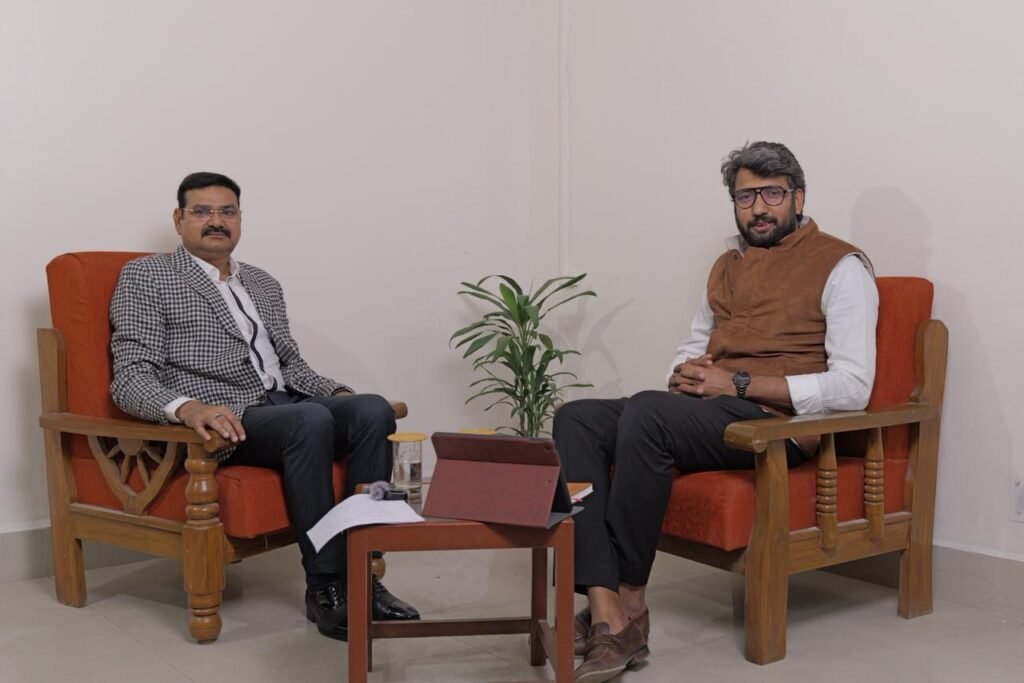
Uttar Pradesh Minister Sanjay Singh Gangwar Outlines Key Achievements and Plans
Uttar Pradesh is India’s largest sugarcane-producing state, with more than 4.5 million farmers directly dependent on sugarcane cultivation for their livelihood.1 Issues such as timely payments, fair pricing, ethanol production, and infrastructure development remain critical for the sector. In an interaction with The Columnist Forum, Uttar Pradesh Minister and Pilibhit MLA Shri Sanjay Singh Gangwar shared detailed data on the state government’s initiatives and its long-term vision for farmers and regional development.
₹2.80 Lakh Crore Paid to Sugarcane Farmers Since 2017
Speaking on sugarcane payments, Shri Sanjay Singh Gangwar stated that from 2017 till date, the Uttar Pradesh government has ensured sugarcane payments amounting to approximately ₹2.80 lakh crore to farmers. He noted that this figure is significantly higher than the total payments made during previous governments. According to the Hon’ble Minister, ensuring timely and transparent payments to farmers has remained a top priority of the current administration.
Advance Payments and Strict Action Against Defaulting Mills
The Hon’ble Minister further informed that during the ongoing crushing season, 49 sugar mills made advance payments to farmers even before crushing operations formally began. At the same time, the government initiated action against 11 sugar mills that failed to adhere to payment timelines. Shri Sanjay Singh Gangwar emphasized that strict accountability has been fixed, and mills that do not comply with payment regulations are dealt with firmly.

Fair Pricing and Direct Benefit to Farmers
On the issue of the State Advised Price (SAP), Shri Sanjay Singh Gangwar said that the government carefully considers farmers’ input costs while framing pricing decisions. He added that regular payments and a streamlined system have significantly reduced farmers’ dependence on middlemen, as payments are now transferred directly to farmers’ bank accounts. According to him, these measures have contributed to improved financial stability among sugarcane farmers across the state.
Technology and Modern Farming Practices
Highlighting the role of technology, Shri Sanjay Singh Gangwar said that sugarcane farmers are now benefiting from digital cane slips, online payment tracking, and mobile-based applications. He also spoke about the promotion of improved sugarcane varieties, trench planting methods, and intercropping techniques aimed at enhancing per-hectare productivity while reducing cultivation costs.
Uttar Pradesh Leads in Ethanol Production
Discussing the ethanol policy, the Hon’ble Minister stated that Uttar Pradesh has emerged as the leading ethanol-producing state in the country. He explained that ethanol production has increased manifold since 2017, strengthening the financial position of sugar mills. This, he said, has played a crucial role in ensuring timely payments to farmers while also supporting the national ethanol blending programme.
Development Projects in Pilibhit
Turning to development work in Pilibhit, Shri Sanjay Singh Gangwar highlighted major projects such as the medical college, improved road infrastructure, and tourism development linked to the Pilibhit Tiger Reserve and the Chuka eco-tourism zone. He stated that these initiatives are generating local employment and contributing to the district’s overall growth.
Focus on Ground-Level Impact
Concluding the interaction, the Hon’ble Minister said that the government’s focus is not limited to policy announcements or figures alone. He emphasized that the ultimate goal is to translate policies into measurable benefits on the ground, ensuring prosperity for farmers and balanced development across the region.
He emphasized that the ultimate goal is to translate policies into measurable benefits on the ground, ensuring prosperity for farmers and balanced development across the region