

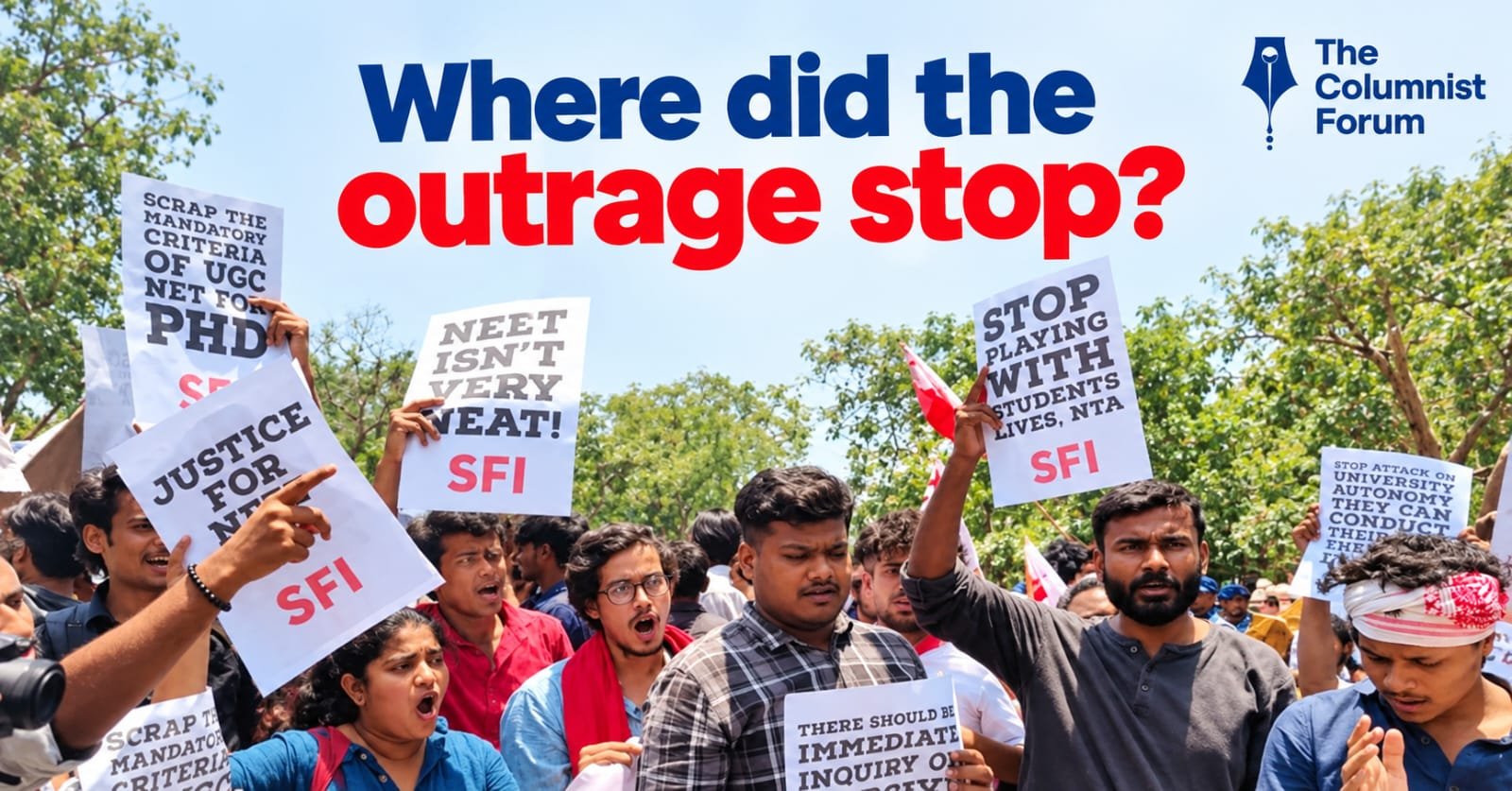
For millions of Indian students, an examination represents far more than a few hours inside a classroom. It represents months or even years of preparation, financial investment, family expectations, personal sacrifices, and the hope of securing a better future. When an examination is compromised by a paper leak, the damage does not end with the cancellation of a question paper. It can disrupt an entire life plan.
The recurring problem of exam paper leaks in India has therefore become more than an issue of examination security. It has become a question of institutional accountability, public trust, fairness and the credibility of merit-based selection.
India Today reported in 2024 that at least 65 major examination paper-leak cases had been recorded across 19 states between January 2019 and June 2024. Its analysis found that at least 27 examinations in its dataset were cancelled or postponed, while recruitment examinations connected to more than three lakh government posts were affected.
The numbers tell us that this is not an isolated failure. It is a recurring cycle.
The Human Cost Behind an Exam Paper Leak
We often discuss examination scandals through numbers: how many candidates appeared, how many arrests were made, how many centres were affected and whether a re-examination was ordered.
But behind every number is a student.
A candidate preparing for a competitive examination may spend months attending coaching classes, buying books, taking mock tests and studying for long hours. Many students sacrifice sleep, social activities and other opportunities because they believe that a fair examination will eventually reward their effort.
A paper leak changes that equation.
When confidential examination material reaches selected candidates before an examination, the fundamental principle of equal opportunity is compromised. A student who has studied honestly is placed in competition with someone who may have received privileged access to the paper.
The consequences can extend far beyond the examination date. Students may lose application fees, travel expenses, coaching fees, accommodation costs and months of preparation. For candidates preparing for age-limited recruitment examinations, a cancelled or delayed examination can also mean losing a valuable opportunity that cannot easily be recovered.
This is why exam paper leaks in India should not be treated merely as incidents of cheating. They are failures that can affect careers and future opportunities.
India’s Exam Leak Problem Is Larger Than One Examination
The problem cannot be reduced to one examination board or one state.
India Today’s 2024 analysis identified paper-leak cases across 19 states, with Uttar Pradesh reporting eight cases, followed by Rajasthan and Maharashtra with seven each. The reported cases involved recruitment examinations, eligibility tests and other important examinations.
The range of affected examinations also demonstrates the breadth of the problem. Teacher recruitment examinations, police recruitment tests, eligibility examinations and other government recruitment tests have all faced allegations or confirmed cases of question-paper leaks.
More recent reporting indicates that the problem has continued beyond the period covered by the 2019–June 2024 dataset. In July 2026, India Today reported that its broader compilation recorded 135 leaks over 22 years, while also noting that India does not maintain a single official national count of examination paper leaks.
That distinction matters.
We should be careful when quoting statistics because different investigations use different definitions, time periods and sources. However, the absence of one centralised database should not obscure the larger reality: repeated examination leaks have become a persistent challenge for India’s competitive examination system.
When Security Measures Fail to Protect the Question Paper
Modern examination centres can look extremely secure.
Candidates may undergo identity verification, biometric authentication, frisking and CCTV surveillance. Electronic devices may be prohibited. Examination officials may follow detailed protocols for handling confidential material.
Yet security inside the examination hall cannot compensate for vulnerabilities earlier in the examination chain.
The question paper has to pass through several stages before a candidate sees it. It may involve printing, packaging, transportation, storage, distribution and coordination between multiple officials and service providers.
Every additional stage introduces another potential point of failure.
This means that an examination cannot be considered secure simply because students are thoroughly checked at the examination centre. If confidential material is compromised before it reaches the centre, the security measures imposed on students cannot prevent the original breach.
The focus therefore needs to move beyond the examination hall and toward the entire examination supply chain.
The Blame Game Can Hide the Larger Failure
Whenever a paper leak becomes public, attention naturally turns toward the people accused of distributing or selling the question paper.
Those individuals must be investigated and, where guilt is established through due process, punished.
But stopping at the immediate culprits leaves a much larger question unanswered:
How did confidential examination material become accessible to them in the first place?
A paper leak requires more than a buyer and a seller. Somewhere in the chain, security has failed.
If the public conversation focuses exclusively on a Telegram group, WhatsApp distributor, middleman or individual accused of selling a paper, we risk treating the final visible link as the entire problem.
The deeper investigation should examine who had access, how access was controlled, whether procedures were followed, whether vendors were properly monitored, whether transportation and storage systems were secure, and whether warning signs were ignored.
The objective should not simply be to identify the person who circulated the paper.
It should be to identify every point at which the system allowed the paper to escape.
Why Re-Examinations Alone Cannot Solve the Problem
A re-examination can be necessary when the integrity of an examination has been compromised. It can restore fairness for affected candidates.
But a re-examination is a remedy for the immediate crisis, not necessarily a solution to the underlying security failure.
The same cycle can occur if the system follows this sequence:
Leak → cancellation → investigation → re-examination → temporary security measures → another leak.
The problem is not solved merely because a new date is announced.
Students have to prepare again. Examination centres have to be arranged again. Officials have to be deployed again. Candidates may have to travel again. Families may have to spend money again.
Most importantly, students have to psychologically return to a preparation cycle that they believed had already ended.
A strong examination system therefore needs to ask a more difficult question: What failed, and what has changed permanently because of that failure?
NEET-UG 2026 and the Cost of Examination Disruption
NEET-UG demonstrates why examination integrity is so important when millions of candidates depend on one national examination.
The official National Testing Agency records show that NEET-UG 2026 was conducted on 3 May 2026, followed by a re-examination on 21 June 2026. The official record also includes notices concerning refunds connected with the 3 May examination and the subsequent re-examination.
More than 20 lakh candidates took the NEET-UG 2026 re-examination across thousands of centres in India and abroad, according to an NTA publication.
This episode illustrates an important distinction: we should not describe NEET-UG 2026 as if the entire examination was simply cancelled for every candidate. The official record instead shows a re-examination process affecting candidates who were required to retake the examination.
The larger lesson remains the same. When the integrity of a high-stakes examination is questioned, the administrative consequences can involve millions of candidates, thousands of examination centres and enormous logistical resources.
The Real Victims Are the Students
When an examination is cancelled or repeated, institutions can issue notices and establish committees.
Students cannot simply press a reset button on their lives.
They may have already rejected other educational opportunities. They may have postponed employment. They may have spent money on coaching. They may have travelled hundreds of kilometres to reach an examination centre.
Some candidates may be preparing for multiple examinations simultaneously. A delay in one examination can therefore interfere with preparation for another.
The emotional cost is equally significant.
Students preparing for competitive examinations already operate under intense pressure. Repeated uncertainty can create frustration, anxiety and a feeling that hard work alone is not enough.
When students begin believing that merit can be defeated by leaked papers or organised malpractice, the credibility of the entire examination system suffers.
Accountability Must Extend Beyond the Immediate Culprits
A credible response to exam paper leaks in India requires accountability at multiple levels.
Those who leak, purchase, distribute or facilitate confidential examination material must face appropriate legal action when evidence establishes their involvement.
But institutional accountability is equally important.
Investigations should establish:
- Where the security breach occurred
- Who had access to confidential material
- Whether examination protocols were followed
- Whether private service providers were involved
- Whether suspicious activity was reported
- Whether officials ignored warning signs
- Why existing safeguards failed
- What permanent corrective measures have been introduced
The goal should be to prevent the next leak rather than simply conclude the previous case.
Recent government action also demonstrates that examination malpractice has become a serious policy concern. The Public Examinations (Prevention of Unfair Means) Act, 2024 introduced a central legal framework targeting unfair means in public examinations, while states have also introduced or strengthened their own measures.
Law is important, but enforcement and institutional design determine whether law becomes an effective deterrent.
Technology Alone Cannot Guarantee Examination Security
Biometrics, artificial intelligence, CCTV cameras, encrypted systems and digital monitoring can strengthen examinations.
They cannot, however, replace human accountability.
Technology is only as effective as the processes surrounding it. If confidential material is compromised before it reaches a protected examination centre, even sophisticated surveillance inside the centre cannot undo the breach.
We therefore need a layered security model.
Confidential papers should be protected during creation, storage, transportation and distribution. Access should be restricted and logged. Vendors should face rigorous scrutiny. Audits should be independent. Digital systems should be monitored for suspicious activity. Physical security should complement technological safeguards rather than operate separately from them.
Most importantly, every stage should have clear responsibility.
When everyone is responsible, nobody can be held responsible. A stronger system assigns specific accountability to specific roles.
Breaking the Continuous Cycle of Paper Leaks
The cycle of paper leak, outrage, cancellation, investigation and re-examination cannot become the normal operating model for competitive examinations.
We need to move from reactive crisis management to preventive examination governance.
That means treating examination security as a continuous process rather than a checklist completed on exam day.
We also need greater transparency after a suspected breach. Candidates deserve to know what happened, which examination centres or groups were affected, why a particular remedy was chosen and what safeguards have been changed.
Transparency does not mean compromising an investigation. It means recognising that students whose futures depend on an examination have a legitimate interest in knowing whether the system that evaluates them is trustworthy.
A Fair Examination Is a Public Trust
An examination is ultimately a promise.
It promises candidates that everyone will be evaluated under substantially the same conditions. It promises that preparation, ability and performance will determine the result rather than privileged access to confidential material.
When that promise is broken, the damage extends beyond the students sitting for that particular examination.
It affects trust in universities, recruitment bodies, government institutions and the broader idea of merit.
We cannot allow repeated paper leaks to become ordinary news. We cannot treat every cancellation as an isolated administrative inconvenience. And we cannot measure success simply by how quickly a re-examination is conducted.
The real measure of reform is whether the same failure happens again.
Students should not have to prepare for an examination twice because the system failed once.
The continuous cycle of paper leaks and exam cancellations can be broken only when accountability reaches the entire examination chain, when security begins long before students enter the examination hall, and when institutional failures receive as much scrutiny as the individuals accused of exploiting them.
For millions of Indian students, an examination is a gateway to the future.
That gateway deserves to be protected with the same seriousness as the aspirations placed behind it.