
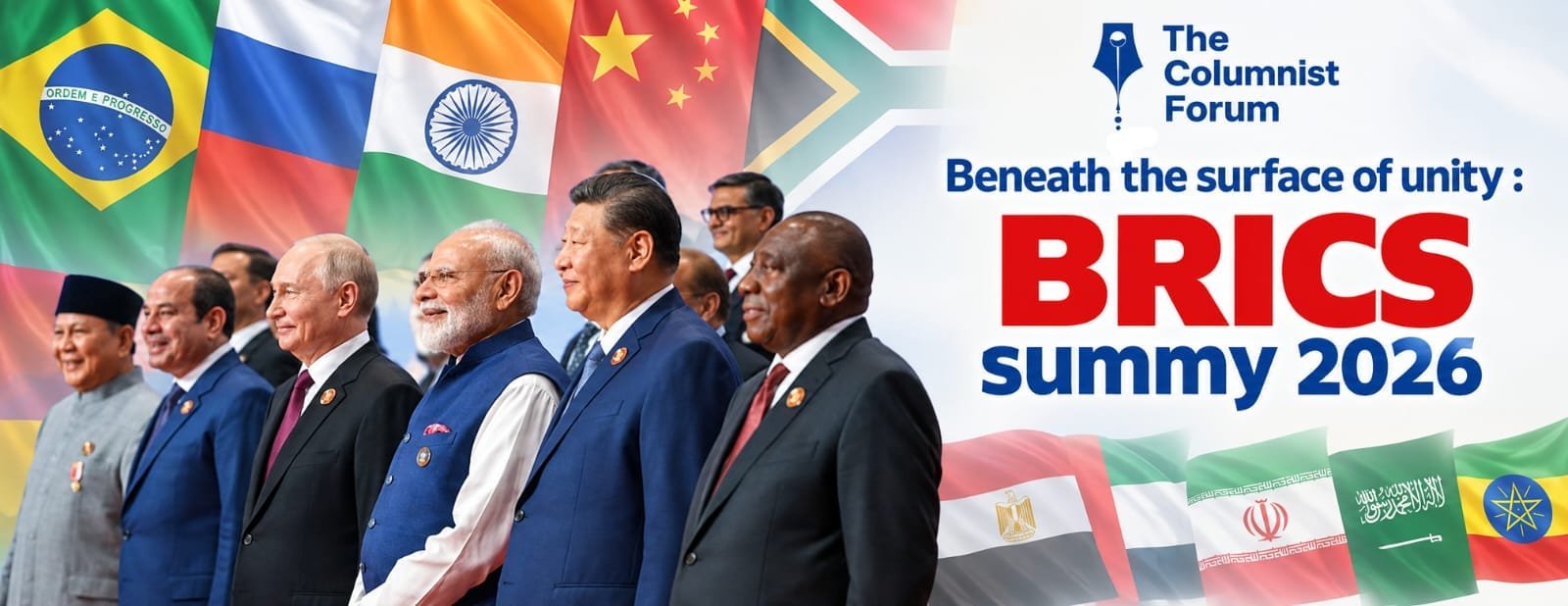
One red carpet, eleven world leaders, a handshake between Putin, Modi, Xi that has been recreated in every geopolitics for the next decade. This was September 12 and 13,2026 in New Delhi. A grand engagement between nations and if you look empirically, all that came out of this is nothing.
This should not come off as a shock because when you put the 18th BRICS summit’s New Delhi Declaration next to a burning crisis, that’s when you realise the power play which challenges West just spent two days perfecting the art of nothing, aesthetically.
This is the side of the summit that didn’t pop up on your feed and vanished beforehand.
The Illusion We Fell For: Unity
So, what exactly was signed during this summit? Looking at the face value, this seemed like an accomplishment, Brazil, Russia, India, China, South Africa, Egypt, Ethiopia, Indonesia, Iran and UAE signing a document collectively. All in a day without any disagreements or walkouts. Doesn’t this alone sound well enough to be a headline? But what made it to the fine print.
- A call for dialogue over unilateral sanctions
- A call for “restraint” in West Asia and support for a two state solution between Israel and Palestine.
- China picking up BRICS chair silently for 2027
- A push to keep global trade and supply chains moving despite the Western sanctions.
- Strict opposition to the forced displacement of Palestinians.
- A jab at ‘global trade war’ without mentioning United States.
Sounds like change is knocking at our door, right? Does it seem like anything is missing?
BRICS In Denial Of Reality: Does Something Seem To Be Avoided?
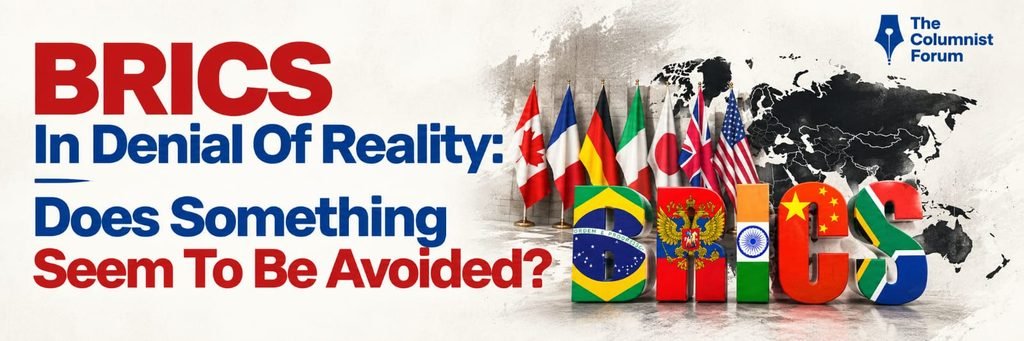
This is where the readers need to pay attention, because it isn’t about what the declaration says but rather what it doesn’t. The term ‘trade war’ was slammed without even mentioning Washington. It demanded retraint in West Asia without condemning the US-Israeli conflicts or Iran’s retaliation against the gulf. It calls out on global conflict without mentioning ‘Ukraine’.
Rethink about this. An entire international community which is built to challenge the world order, could not even bring itself to call out its own members. This isn’t tactics, its powerful psychology. When you remove a name tag to an action, accountability reduces. For example, if you steal from a shop and instead of punishing you, they put up a poster saying “neighbourhood boy steals items”. This will reduce accountability from your side because you are aware you wouldn’t be called out. Similarly, these group of countries are divided behind curtains and yet pretentious enough to agree on the one statement which is saying nothing at all.
The Three Pointers Hiding Behind These Handshakes.
Every year it’s the same cracks that goes hidden under a coat of diplomacy. 2026 was not any different but better polishing through cameras.
- Russia war: Ukraine gets a polite brush off instead of a mention because naming and addressing would seem like picking sides which obviously BRICS cant afford.
- The hushed politics between India and China: Two of the giant economies still choosing quiet rivalry over who actually leads the coalition, keep hand holding aside. These topics instead of confronting gets sugar coated by performative leaders.
- Iran and Gulf still not on talking terms: when you call “restraint” between two of the BRICS adjacent players during active tension, its not termed ‘diplomacy’. Its changing the topic swiftly.
When a bloc cant resolve internal tensions among them out loud, it isn’t building world order, its just performative politics.
Who Is Losing In All This?
What we should be paying is the smaller companies BRICS claims to speak for. The countries hoping for financial relief without IMF strings attached, a say in the whole AI governance, an alternative to Western dominated financial system.
What did they receive from the New Delhi summit? Notes on Food security and sustainable development. Not a single dollar moved and neither any single institution reformed. This meant that no single power structure actually shifted.
Over the years, BRICS members grew from only five members to eleven at present to amplify the Global South’s voice. Instead, this resulted in more competing interests, carefully unnamed disagreements and declarations which are practically watered down only to satisfy the eleven leaders.
What Happens Next Should Be A Concern.
With China holding the next chair in 2027, the language might get more smoother.
A bloc that couldn’t speak up about internal rivalries or about Ukraine, West Asia, is not about to get over this ‘fear of communication’ under Beijing anytime soon.
BRICS doesznt need another photo album of leaders appreciating each other next year. It needs to sit through disagreements, resolve issues in public. Until these happen, its no less than a red carpet at Met Gala.
The real question isn’t what BRICS said this September, its whether anyone will still be listening the next time.