

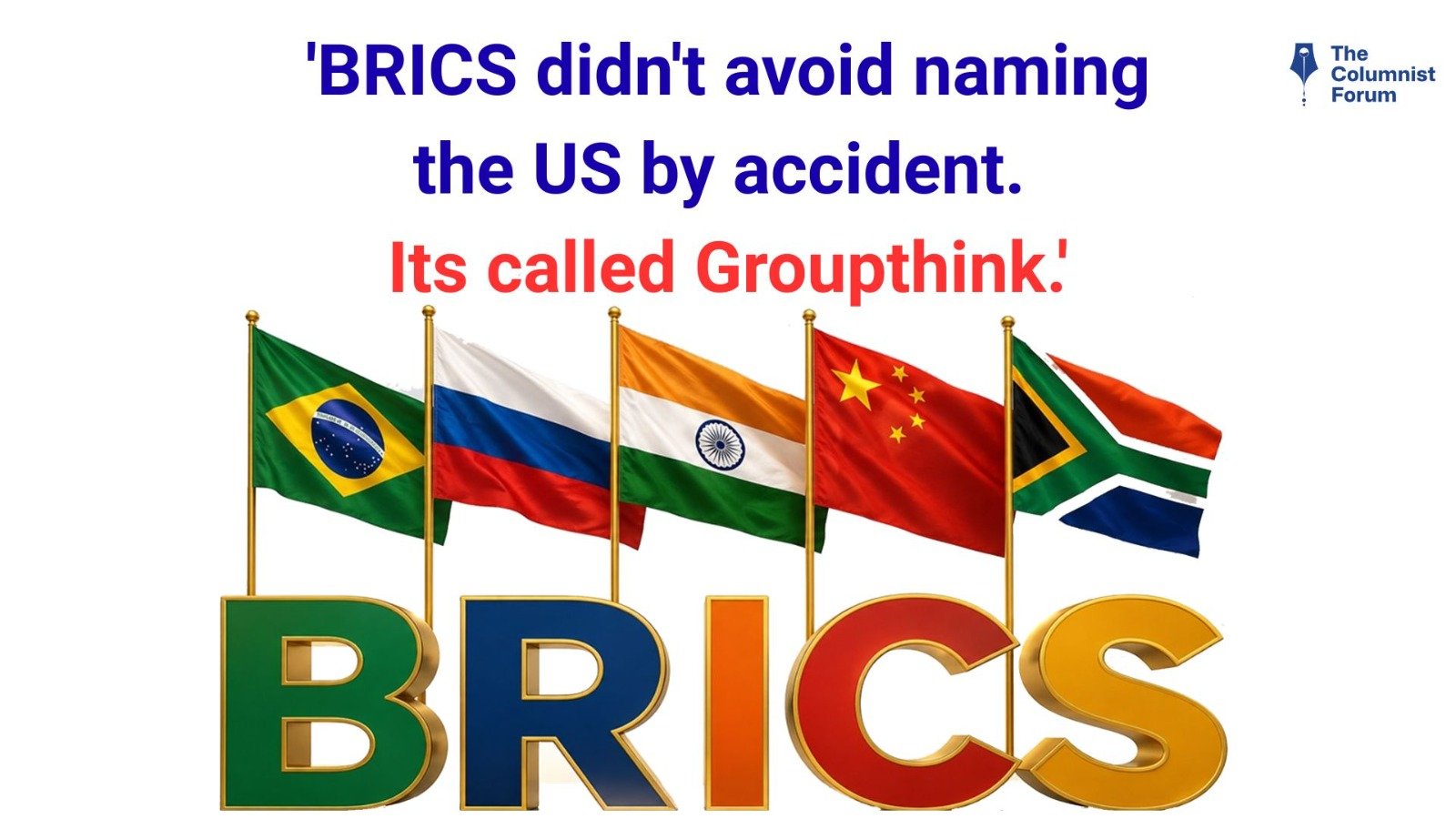
The idea of a BRICS common currency has spent years moving between political speeches, economic speculation and headlines about the future of the global financial system. Yet the reality emerging from the 18th BRICS Summit in New Delhi in 2026 is considerably more practical.
There is still no single BRICS currency.
There is no announced monetary union.
There is no common central bank responsible for a new BRICS unit of account.
Instead, BRICS members are concentrating on something less dramatic but potentially more consequential: making it easier to trade with one another using national currencies and improving cross-border payment infrastructure.
That distinction matters.
The future of BRICS de-dollarization may therefore have less to do with launching a spectacular new currency and more to do with gradually reducing the number of transactions that require the US dollar in the first place.
BRICS Common Currency: What Happened in 2026?
The 2026 New Delhi Summit did not produce the long-anticipated announcement of a unified BRICS currency.
India’s Ministry of External Affairs made the position particularly clear during the summit: there was no proposal for a BRICS currency at that time.
Instead, discussions focused on local-currency trade, reducing transaction costs and improving payment connectivity between member countries.
The distinction is important because a common currency and local-currency settlement are completely different projects.
A common currency would require participating countries to accept a shared monetary framework. Such an arrangement would raise difficult questions about monetary policy, exchange rates, inflation, reserves, financial regulation and the authority responsible for managing the currency.
Local-currency settlement is much simpler.
India and another BRICS member can attempt to settle a bilateral transaction in rupees and the partner’s currency without first converting the transaction into US dollars. That does not create a new currency. It simply changes the mechanism through which an existing trade is paid for.
The New Delhi Declaration follows this more cautious approach. It recognizes work on cross-border payment interoperability and discussions around trade settlements and investment using BRICS national currencies. It also emphasizes that there is no single approach that fits every member.
Why BRICS Is Not Launching a Single Currency
A shared currency sounds attractive when viewed from a political distance. In practice, however, it would be one of the most difficult forms of economic integration imaginable.
BRICS now brings together economies with very different monetary systems, financial markets, trade structures and geopolitical priorities.
China is the largest economy in the grouping and has a globally important currency in the renminbi. India has a different monetary policy framework and has historically maintained considerable strategic autonomy in international finance. Russia’s financial system has been reshaped by sanctions, while Brazil has its own economic priorities in Latin America.
The other members add even more complexity.
A common currency would therefore require countries to answer a fundamental question:
Who would control it?
If the currency were strongly influenced by China’s economic weight, other members could worry about excessive dependence on Beijing. If governance were divided equally, the system could become extremely difficult to operate. If decisions required consensus, monetary responses could become slow during a crisis.
The European experience demonstrates that sharing a currency is far more complicated than agreeing to trade more closely.
BRICS members do not currently have the political or economic integration necessary for that kind of monetary union.
The More Practical BRICS Currency Strategy
The absence of a common BRICS currency does not mean that nothing is happening.
In fact, the more important development may be occurring underneath the headline.
BRICS is attempting to make local-currency transactions easier.
This means countries can explore bilateral arrangements in which imports and exports are settled in national currencies rather than automatically passing through the dollar.
For businesses, the motivation is straightforward.
If a company can complete an international transaction without unnecessary currency conversions, it can potentially reduce transaction costs. If payment systems become interoperable, transfers can potentially become faster and more efficient.
This is why the BRICS Payment Task Force has become increasingly relevant.
Rather than designing one currency for eleven economies, the bloc is working toward better connections between existing payment and messaging systems.
That is a much less dramatic proposition.
It may also be much more achievable.
BRICS Cross-Border Payments Could Matter More Than a New Currency
The biggest mistake in discussions about BRICS de-dollarization is to assume that the only meaningful alternative to the dollar is another single global currency.
That is not necessarily how monetary systems evolve.
A country does not need to abandon the dollar completely to reduce its dependence on it.
Suppose two BRICS countries conduct more trade directly in their national currencies. Then a portion of that trade no longer requires dollars as the intermediary.
Multiply that process across dozens of bilateral relationships and thousands of companies, banks and transactions, and the effect becomes more significant.
This is why BRICS cross-border payment systems may ultimately be more important than the branding of a hypothetical BRICS currency.
The objective is not necessarily to replace the dollar overnight.
The objective is to create additional choices.
BRICS De-Dollarization Is More Likely to Be Gradual
The phrase de-dollarization often creates the impression of a dramatic event in which the dollar suddenly loses its international role.
The reality is likely to be much slower.
The US dollar remains deeply embedded in global trade, international finance, foreign-exchange markets and central-bank reserves. Replacing such a system would require an alternative with sufficient liquidity, convertibility, credibility and global acceptance.
BRICS does not currently possess one unified alternative.
What it does possess is economic scale.
If member countries increasingly settle portions of their trade in national currencies, develop payment links and expand local-currency financing, the cumulative effect could gradually reduce dependence on dollar-based settlement for some transactions.
That is a fundamentally different strategy from creating a single BRICS currency.
It is also one that can be implemented incrementally.
China, Russia and India Have Different Reasons for Supporting Local Currencies
The BRICS financial agenda cannot be understood as though every member has the same objective.
China has an obvious interest in increasing the international use of the renminbi and strengthening its financial infrastructure.
Russia has particularly strong incentives to develop payment mechanisms that reduce exposure to Western financial restrictions and sanctions.
India has taken a more carefully balanced position. New Delhi has supported greater use of national currencies and improved payment connectivity while repeatedly avoiding the framing that this necessarily represents a campaign to overthrow the dollar.
That distinction is important.
India’s objective is better described as strategic financial flexibility rather than an immediate attempt to replace the existing international monetary order.
For smaller BRICS economies, local-currency mechanisms can provide additional options without requiring them to surrender monetary sovereignty to a new supranational currency.
These different motivations explain why BRICS can agree on practical payment cooperation even when members cannot agree on a common currency.
Why the BRICS Payment Model Is Easier Than a Common Currency
A shared currency requires countries to give up a substantial degree of monetary independence.
A payment network does not.
That makes payment interoperability politically easier.
Each country can retain its own central bank, currency, interest-rate policy and exchange-rate framework while still improving the way its financial institutions communicate with foreign counterparts.
This is precisely why the 2026 BRICS discussions deserve attention.
The bloc is moving away from an abstract question — “What would a BRICS currency look like?” — toward a practical one:
“How can BRICS countries make cross-border trade faster, cheaper and less dependent on intermediary currencies?”
The second question is much easier to implement.
What the New Delhi Declaration Actually Signals
The BRICS New Delhi Declaration 2026 is significant not because it announces a monetary revolution, but because it reinforces a gradual financial-integration strategy.
The declaration recognizes work on cross-border payment mechanisms and interoperability between payment and messaging channels. It also supports discussions around trade settlement and investment using local currencies while respecting national priorities.
That wording reveals the political reality inside BRICS.
There is cooperation, but there is no monetary union.
There is interest in reducing transaction costs, but there is no agreement to establish one currency.
There is discussion about payment infrastructure, but not a new BRICS central bank issuing a shared currency.
In other words, the group is pursuing financial connectivity without monetary unification.
Could BRICS Eventually Create a Common Currency?
The possibility cannot be ruled out permanently, but the obstacles are substantial.
A credible common BRICS currency would require agreement on governance, monetary policy, exchange-rate management, reserves, capital controls, banking regulation and crisis support.
There would also need to be confidence that all members would accept the rules during economic stress.
That is difficult even among countries with relatively similar political and economic structures.
For an expanded BRICS containing major economies with very different interests, it would be an exceptionally ambitious undertaking.
For now, the evidence points somewhere else.
The bloc is more interested in building payment alternatives first and leaving the question of a common currency unresolved.
That sequencing makes economic sense.
Build the infrastructure.
Increase local-currency trade.
Improve payment interoperability.
Develop financial connectivity.
Then determine whether deeper monetary integration is actually necessary.
The US Dollar Is Not Being Replaced Overnight
The absence of a BRICS currency should also prevent exaggerated predictions about the immediate collapse of the dollar.
The dollar continues to benefit from the depth and liquidity of US financial markets, its widespread use in international trade and finance, and its established role in the global monetary system.
A BRICS payment initiative does not automatically change those fundamentals.
What can change is the marginal transaction.
One oil shipment may be settled without dollars.
One bilateral trade agreement may use national currencies.
One payment corridor may bypass an intermediary currency.
One financial institution may develop a direct settlement arrangement.
Individually, these developments can appear insignificant.
Collectively, they can create a more diversified international payment environment.
That is the more realistic meaning of BRICS de-dollarization.
The One-Wallet Problem Is Really a Trust Problem
The greatest obstacle to a common BRICS currency may not be technology.
Modern financial technology can connect payment systems across borders.
The harder issue is trust.
Would every member trust the institution controlling the currency?
Would countries accept monetary decisions that conflicted with their domestic interests?
Would smaller economies accept the influence of the largest members?
Would major economies accept a governance structure that diluted their individual control?
These questions cannot be solved by creating a digital token or announcing a new name.
A currency is ultimately an institutional promise.
It depends on confidence in the monetary authority behind it.
That is why a BRICS common currency remains far more complicated than a BRICS payment system.
What Comes Next for BRICS De-Dollarization?
The next stage is likely to be incremental.
We can expect continued attention to local-currency settlement, payment-system interoperability, financial messaging, central-bank digital currency connectivity, development-bank financing and bilateral trade mechanisms.
These initiatives do not eliminate the dollar.
They create alternatives around specific transactions.
That distinction should shape the way BRICS developments are evaluated.
The important question is no longer whether BRICS will suddenly unveil a currency capable of replacing the dollar.
The better question is whether BRICS can build a sufficiently efficient financial ecosystem in which members increasingly have the option of trading, investing and settling payments without relying on the dollar for every transaction.
If that happens, de-dollarization will not arrive as a single historic announcement.
It will happen gradually.
Conclusion: BRICS Does Not Need One Currency to Challenge Dollar Dependence
The 2026 BRICS Summit did not deliver the long-discussed BRICS common currency.
It delivered something more modest: continued work toward better cross-border payments, greater use of local currencies and deeper financial cooperation.
That may appear underwhelming compared with the idea of a new currency challenging the dollar.
But it may actually be the more realistic path.
A single BRICS currency would require an extraordinary level of economic and political trust.
A network of bilateral settlements and interoperable payment systems requires much less.
For now, BRICS appears to understand that difference.
The dollar is not being replaced by a new BRICS banknote. Instead, the foundations of a more diversified payment system are being built transaction by transaction.
The real test will therefore not be whether BRICS launches a spectacular currency.
It will be whether its members can make local-currency trade efficient enough that businesses, banks and governments actually choose to use it.
If they succeed, the financial map could change without a single new currency ever being printed.