

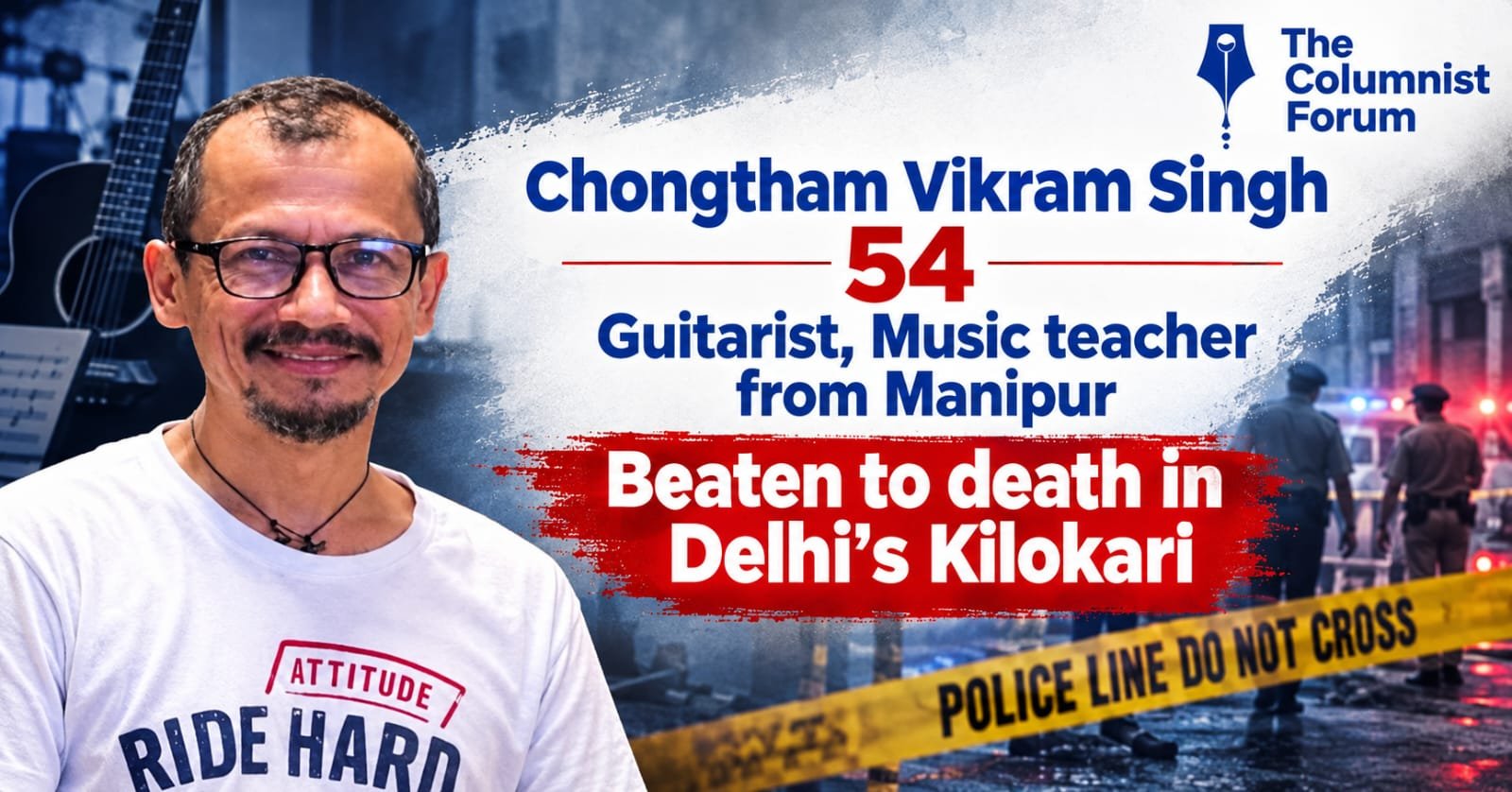
Chongtham Vikram Singh, a 54- year old Manipuri guitarist and music teacher was allegedly tortured and killed by a group of eight men in New Delhi’s Kilokari area. The reason behind it being he asked them to lower their music volume.
How do you recreate someone’s death with AI and then call it news? The tragic death of Vikram sparked outrage across India, especially towards the north eastern states. However, the horror of this incident did not just end there. Several days after, an AI generated video produced by Times Now circulated across the internet depicting the entire incident. When national news channel chose to broadcast this graphic AI generated recreation of this tragic death, it overlooked media ethics and basic human dignity only for the sake of sensationalism.
This was not journalism; it was creating content for public interest. Turning a respected human being’s brutal murder into content for television ratings, exposed a dangerous low for media spectacle. As AI continues to dominate fields in contemporary world, it also forces us to confront a terrifying reality, did we stoop that low to make total gamification of a human tragedy?
This instance shows us the dangerous boundaries that AI can cross:
- Animated murder: The entire video of the brutal death is made to look like a video game like aesthetic. From the part where he was walking down, beaten and his son carrying him to the hospital, everything has been inhumanely recreated in animation format before his family could even bury him yet.
- Turning tragedy into content: Imagine your final moments of tragedy turn into content for capturing attention and gaining visual engagement. The victim’s death turned into media business.
- Desensitization: The incident in itself was already a horrifying one, additionally making it seem visually appealing for audience crossed every boundary of basic media ethics.
We have known AI making lives easier and bringing us towards a smarter and more developed nation. However, does this justify AI blurring the lines between verified news and desensitized fiction. An animated recreation of a tragic death is no less than humorifying the entire incident. These people raising prompts on how such an incident must have looked like and speculating it rather than considering actual evidence to map out a proper visual image by professionals, is in itself a low for humanity. This shows that the entire tragedy is used as a visual content for marketing purpose and appeal an audience.
The consequences to this will remain a scar to this nation-
- Inconsideration of media ethics: Every media house knows the basics of crossing a boundary when it comes to reporting. However, Times Now generating this video of Vikram Singh proved dangerous realities of media houses on how visual appeal and sensationalized narrative is more important than factual data and credibility. This entire incident sparks light upon the dark reality of media houses.
- Family privacy and psychological impact: The showcase of this tragic animated video brings immediate denial to consent, privacy or basic human rights to Vikram and his family. For the grieving family, in between mourning, they had to encounter cartoon- like depiction of their loved one being murdered. The entire severity of the situation was recreated as some sort of mockery to the public eyes by these media houses. Further traumatic impact for his family is bound to be deeply scarred. For a mother who lost her son, a wife who lost his husband or children who lost their father, or a nation who lost its integrity by denying basic fundamental rights to a person, this is a new low for media houses.
Cultural insensitivity towards marginalized community:
Vikram Singh, being a citizen of Manipur, already belongs to a culturally marginalized community which makes us reflect on cultural bias and insensitivity towards the community. North east community has faced prolonged discrimination, prejudice and stereotypical perspectives from the other regions of India. This incident makes us take a step back and reflect on how such incidents are not isolated ones and quite common towards North Easterns. The outrage gets silenced by repeated ignorance by central bureaucracy and the pattern continues. Racial slurs, stereotypical beliefs, discrimination in workplaces towards these communities are to a point noticed on a macro scale in mainstream India.
When a mainstream news channel decides to air such AI content only to this specific tragedy, it makes itself part of the problem building cultural insensitivity and casually trying to normalize racial discrimination. It is hard to imagine a citizen of a mainstream metropolitan state to go through similar encounters and have AI generated depiction made out of it. This is where cultural bias roots from.
Ethical Boundaries in the age of AI:
In the field of journalism, it is important to keep in mind the ethical considerations. Especially when it comes to crime reporting, consent, factual data, and privacy should be strictly mandated. Vikram Singh’s case requires immediate removal of the generative video and necessary action towards the media house.
Technology has made lives easier and much convenient for people. Especially today in corporate work style, AI has been a mandate and skills are told to be important as well. But did we realise what this dependency is costing us. It becomes much darker from here to a point when humans will have successfully lost power or control over AI.
Did we stoop this low to have humanity lose its essence?