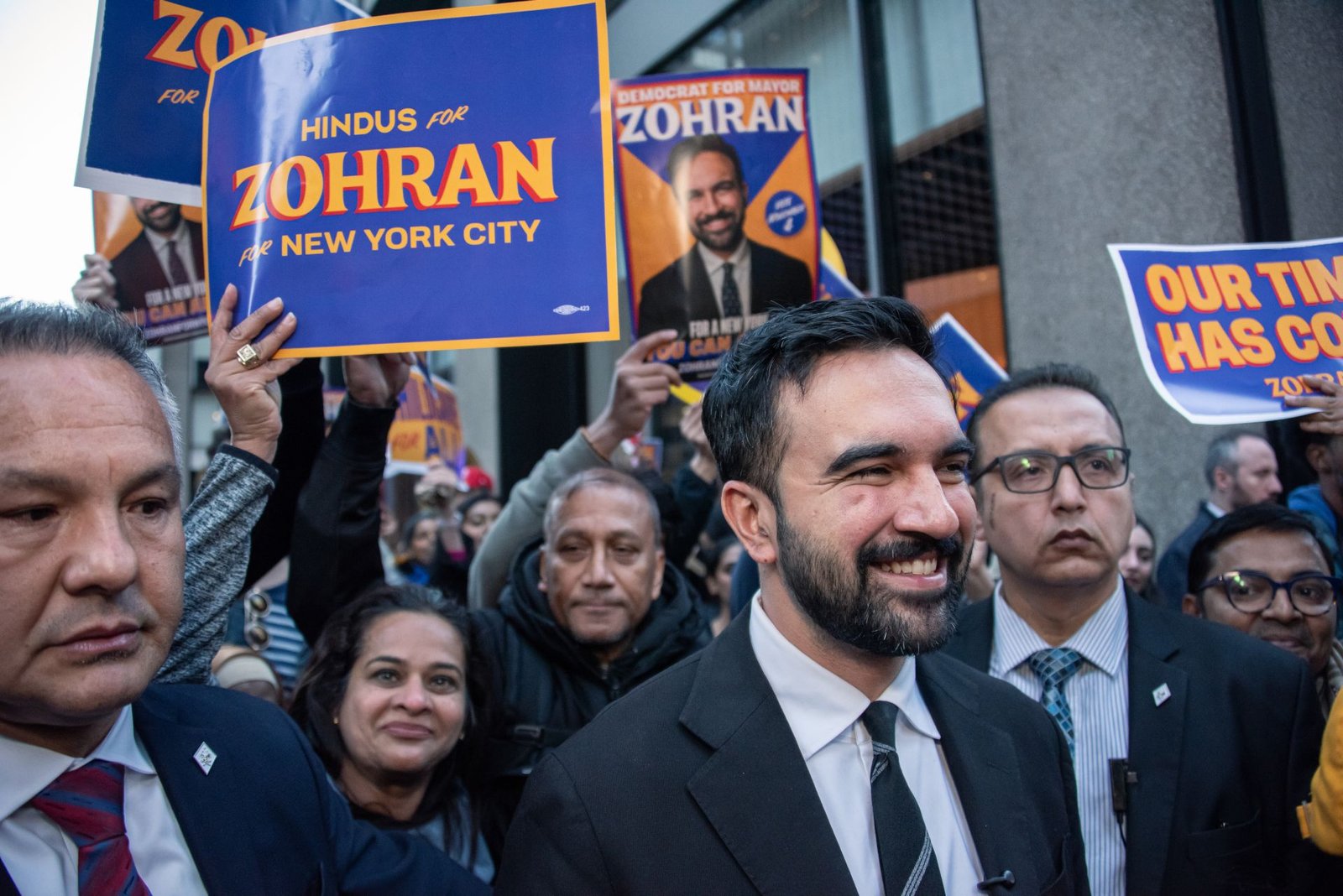

Ever partied at a bar only to find a mayoral candidate vibing to the beats without security, chatting with strangers, and urging the youth to vote?
If not, you probably haven’t met Zohran Mamdani — the 34-year-old democratic socialist who has become one of New York’s most energetic and relatable political figures.
His signature?
A wide grin, unfiltered humour, and a campaign style that feels more like a community festival than a political operation.

Who is Zohran Mamdani?
Born in Kampala, Uganda, in 1991, Zohran K. Mamdani moved to New York City at the age of seven. As the son of acclaimed filmmaker Mira Nair and renowned political theorist Mahmood Mamdani, he grew up surrounded by art, activism, and intellectual debates — a combination that later shaped his political approach.
After graduating from Bowdoin College with a degree in Africana Studies, he worked as a housing counselor, helping families avoid foreclosure. Those experiences grounded his politics in the everyday struggles of working-class New Yorkers.
In 2020, Mamdani was elected to represent Astoria, Queens, in the New York State Assembly, quickly rising as one of the most prominent faces of the Democratic Socialists of America (DSA).
He was once a rapper (Young Cardamom), speaks multiple languages, and is a passionate Arsenal fan. But most importantly, he has made politics feel human again.
The Core Issue: Affordability as a Daily Reality
For Zohran Mamdani, affordability is not a slogan — it’s the foundation of his political vision.
With New York’s median rent for a one-bedroom crossing $3600 in 2024 (a 40% rise since 2019) and nearly half of New Yorkers spending more than 30% of their income on housing, Mamdani describes the affordability crisis as man-made, not inevitable.
His mission is clear:
“Reclaiming the right to live in the city you love.”
Key Affordability Proposals
- Rent freeze on all rent-stabilized apartments (nearly 1 million units).
- Construction of 200,000 new public housing units in 10 years.
- Funded through progressive taxes, including a millionaire surtax and corporate profits levy (~$10B/year).
- Fare-free buses to save commuters ~$1200 annually.
- City-owned grocery stores to combat food deserts and high price markups.
By connecting housing, transportation, and daily costs, Mamdani reframes progressivism as a fight for dignity, stability, and belonging.
The Mamdani Vision: Four Pillars for a Just City
Zohran Mamdani’s campaign is built on four major pillars:
Housing for All
Housing is treated as a basic right, not a commodity.
- City-owned Public Development Authority
- Permanently affordable housing
- Redirect luxury tax breaks toward community housing
- Ending speculative vacancy
Mobility for All
Public transport as a public good, not a revenue stream.
- Fare-free buses
- Expanded bike lanes
- Local control over the subway by breaking the “Albany Chokehold”
Work for All
Strengthening labor power and improving wages.
- Citywide $25 minimum wage
- Worker protections for gig and delivery workers
- Municipal Jobs Guarantee Program
- Green infrastructure and cultural preservation jobs
Power for All
A decentralised democracy that puts decision-making in the hands of locals.
- Community budgeting
- Tenant councils
- Worker-owned cooperatives
- Volunteer-led organizing model already used in his campaign
Together, these pillars form a blueprint for a New York rooted in equity, access, and collective power.
A Campaign That Felt More Like a Community Movement
Mamdani’s campaign was not built on corporate banners or sterile podiums.
- Open mics
- Dance nights
- Street canvassing
- Volunteers who were DJs, poets, designers
Democracy doesn’t need managers — it needs hosts.
His humor and relatability turned cynicism into curiosity. His policy sessions felt like teach-ins. His rallies were more like block parties. And this genuine approach built real trust — something modern politics often lacks.
Politics With a Human Heart
Mamdani’s politics blend art, culture, community, and economics.
- Rent strikes
- Hip-hop
- Diaspora
- Working-class issues
His campaign produced a mini-documentary series called “Our City, Our Stories”, showcasing real New Yorkers and their lived realities.
The Visual Identity: A Movement That Looked Like the City
- Hand-drawn art
- Graffiti-style typography
- Multilingual posters
- Borough-specific design themeCommunity-created illustrations
The Risks and the Stakes
- Real-estate PACs spending $20M+
- Corporate donors
- Moderates calling him “too radical”
The Legacy: A Test of Imagination
Zohran Mamdani’s campaign became more than an election — it became a movement of joy, imagination, and collective purpose.
- Voters into participants
- Campaigns into communities
- Politics into something human again