
A Living Heritage Carved in Stone
In the heart of Odisha, where history breathes through ancient temples and sacred architecture, we encounter a tradition that refuses to fade—traditional stone carving. This is not merely an art form; it is a living legacy, shaped by generations of artisans whose hands have transformed lifeless rock into expressions of divinity, culture, and identity.
At the center of this enduring tradition stands the Raghunath Mohapatra Art and Craft workshop, a sanctuary of craftsmanship where the rhythmic strike of chisel against stone echoes like a heartbeat. Here, we witness not just the continuation of an art, but the preservation of a civilization’s artistic soul.


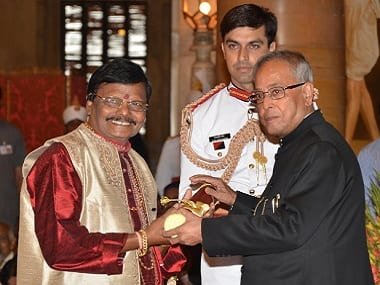
The Legacy of Raghunath Mohapatra: A Pillar of Indian Stone Art
We recognize Padma Vibhushan awardee Raghunath Mohapatra as one of the most influential figures in Indian stone carving. His work is deeply rooted in the architectural brilliance of Odisha, particularly inspired by the iconic Konark Sun Temple.
His craftsmanship was not limited to replication—it was about reviving ancient techniques with unmatched precision and devotion. Through his creations, he carried forward the lineage of temple builders who once sculpted the sacred structures of Puri Jagannath Temple, embedding history into every curve and contour of stone.
This legacy is not symbolic—it is literal. The name of his ancestor, Aparti Mohapatra, remains etched in stone at the Jagannath Temple, a testament to a lineage that has shaped centuries of artistic excellence.
Smitesh Mohapatra: The Reluctant Heir Turned Custodian
We observe a compelling transformation in Smitesh Mohapatra, the grandson of Raghunath Mohapatra. His journey was not predetermined. Initially inclined toward sports, particularly cricket, his path diverged dramatically when he chose to embrace the demanding world of stone carving.
This decision was not romantic—it was deliberate and difficult. The workshop environment is harsh, filled with dust, heat, and physical strain. Yet, Smitesh demonstrated resilience, choosing mastery over comfort.
Under the disciplined guidance of his grandfather, he began not with machines but with fundamentals—drawing, proportion, and design. This approach reflects a critical truth: true artisanship begins in the mind before it reaches the hands.
The Traditional Stone Carving Process: Precision Across Four Stages
We identify that the strength of Odisha’s stone carving tradition lies in its methodical and time-intensive process, which ensures unmatched quality and authenticity.
1. Khola (Stone Selection)
The process begins with selecting the right stone. This step demands experience and instinct, as the durability and texture of the stone determine the final outcome.
2. Gadheiba (Rough Shaping)
In this stage, artisans begin shaping the stone into a basic form. It is labor-intensive and requires both strength and spatial understanding.
3. Matha (Refinement and Smoothing)
Here, the sculpture begins to take recognizable form. Surfaces are smoothed, and proportions are perfected with meticulous attention.
4. Detailed Carving (Final Articulation)
The final stage brings life to the sculpture. Intricate details such as facial expressions, ornaments, floral patterns, and symbolic motifs are carved with precision.
This entire process can take three to six months, proving that authentic craftsmanship cannot be rushed.
Why Machines Fail Where Hands Succeed
We must address a critical misconception: machines cannot replace traditional artisans. While machines can cut and shape, they lack the ability to create emotion, expression, and depth.
A handcrafted sculpture carries:
- Subtle variations that reflect human touch
- Cultural symbolism embedded in design
- Spiritual essence that machines cannot replicate
This is the difference between production and creation. One is mechanical; the other is meaningful.
The Workshop: A Stronghold of Cultural Preservation
The Raghunath Mohapatra Art and Craft workshop stands as a defiant stronghold against cultural erosion. With around 70 skilled artisans, it continues to produce exceptional work despite modern challenges.
These artisans:
- Work through extreme weather conditions
- Uphold centuries-old techniques
- Dedicate years to mastering their craft
This is not an industry driven by profit—it is sustained by passion, discipline, and heritage.
The Crisis: Why Traditional Arts Are Declining
We confront an uncomfortable reality: traditional arts are disappearing.
The reasons are clear and unavoidable:
- Lack of patience in younger generations
- Preference for stable, office-based careers
- Physical demands and low financial returns
- Limited institutional support
Even artisans themselves discourage their children from entering the field. This creates a dangerous cycle where knowledge is not transferred, and traditions risk extinction.
Revival Through Education and Awareness
We believe that the survival of stone carving depends on structured education and institutional recognition.
Introducing stone carving into:
- University curriculums
- Vocational training programs
- Cultural preservation initiatives
can transform perception. When treated as a respected profession rather than a declining craft, it attracts serious learners and ensures continuity.
Vision Beyond Replication: The Aditya Narayan Temple Dream
Raghunath Mohapatra envisioned more than preservation—he aimed for innovation rooted in tradition. His dream of building the Aditya Narayan Temple reflects this ambition.
Unlike Konark, which stands as a monument, this temple is intended to be a living place of worship, blending architectural brilliance with spiritual purpose.
This vision represents the future of traditional art—not static, but evolving while honoring its roots.
Stone as a Medium of Timeless Expression
We understand that stone carving is not just about aesthetics. It is about:
- Storytelling through form
- Preserving cultural narratives
- Creating objects that outlive generations
Each sculpture becomes a permanent record of human creativity, resisting time and decay.
Conclusion: Preserving What Cannot Be Recreated
We stand at a critical juncture. The art of stone carving in Odisha is not just a heritage—it is a responsibility. Losing it would mean losing:
- Centuries of accumulated knowledge
- A unique artistic identity
- A vital link to our past
Through the efforts of artisans like Smitesh Mohapatra, the legacy continues—but survival is not guaranteed.
If we fail to support, promote, and institutionalize this craft, it will not slowly fade—it will disappear entirely.
The truth is simple and unavoidable:
What took generations to build can vanish in one.
And once it’s gone, no technology, no machine, and no revival effort will ever truly bring it back.