
Cricket has undergone dramatic transformation over the last two decades, but no nation has influenced the evolution of T20 cricket more than India. What began as a format viewed with skepticism eventually became the most commercially successful and globally watched version of the sport. Through strategic innovation, fearless players, and the rise of the Indian Premier League (IPL), India reshaped how T20 cricket is played, marketed, and dominated. Today, India stands as the defining superpower of T20 cricket, a position earned through years of experimentation, setbacks, and ultimately, revolutionary change.
The Beginning of a T20 Revolution in 2007
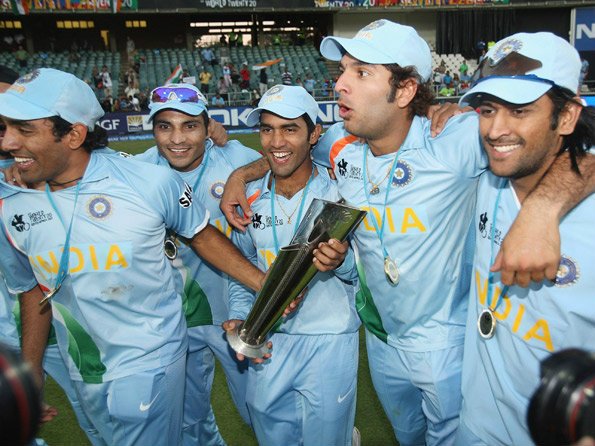
The 2007 ICC T20 World Cup marked the birth of a new era in cricket. At the time, T20 cricket was still considered an experimental format. Many established cricketing nations were unsure whether the format would gain long-term popularity. India itself approached the tournament cautiously, with several senior players opting to skip the competition.


A young and relatively inexperienced squad led by MS Dhoni traveled to South Africa without the burden of expectations. That absence of pressure allowed the team to play with freedom, creativity, and instinct. India’s aggressive approach surprised opponents and spectators alike.
The defining moment came in the dramatic final against Pakistan, one of the most intense matches in cricket history. India’s narrow victory not only delivered the country’s first T20 World Cup title but also ignited a nationwide obsession with the format.
This victory directly led to the creation of the Indian Premier League (IPL) in 2008, which would soon become the most influential T20 league in the world.
The Rise of the IPL and India’s Global Influence
The IPL transformed cricket economics and player development. It created a platform where international superstars, young domestic talents, and innovative coaching methods collided in a fast-paced environment.
Several critical changes emerged from the IPL structure:
- Aggressive batting strategies
- Data-driven team selection
- Specialized T20 roles for players
- Massive financial investment in talent development
Young Indian players began gaining exposure to global competition early in their careers. Facing international bowlers in high-pressure matches accelerated their growth and confidence.
More importantly, the IPL normalized high-risk, high-reward batting styles, which would later redefine India’s national team approach.
Years of Frustration: 2007–2022
Despite winning the inaugural tournament, India endured a long drought in ICC T20 World Cups. Between 2007 and 2022, the team consistently reached knockout stages but failed to secure another trophy.
Several patterns contributed to these disappointments.
India’s batting approach during this period was often criticized as overly conservative. Top-order batsmen frequently prioritized preserving wickets instead of maximizing powerplay scoring opportunities. The strategy worked well in bilateral series but struggled against ultra-aggressive teams such as England, Australia, and the West Indies in World Cup competitions.
Repeated exits in semifinals and the 2014 final loss to Sri Lanka highlighted a growing tactical problem. While the rest of the world embraced explosive hitting from the first ball, India often accelerated too late in the innings.
The gap between safe cricket and fearless T20 cricket became impossible to ignore.
Strategic Transformation After 2022
By 2022, India recognized that their conservative approach no longer matched the demands of modern T20 cricket. The team management implemented a complete strategic reset.
Under the leadership of Rohit Sharma, supported by innovative players such as Suryakumar Yadav, India adopted a radically aggressive philosophy.
Key tactical changes included:
- Attacking from the first ball
- Prioritizing strike rate over batting average
- Encouraging risk-taking in the powerplay
- Promoting versatile hitters capable of scoring 360 degrees
Instead of protecting wickets, Indian batsmen began focusing on maximizing scoring opportunities early in the innings. This approach placed immediate pressure on opposing bowlers and forced rival teams onto the defensive.
The shift mirrored strategies already popular in franchise leagues but had never been fully implemented by the national team.
The Historic 2024 ICC T20 World Cup Triumph
The transformation reached its defining moment during the 2024 ICC T20 World Cup, held across the United States and the Caribbean.
India entered the tournament with a balanced squad combining experienced players with fearless young talent. The team’s aggressive batting strategy immediately proved effective, allowing India to dominate the group stage and knockout rounds.
One of the most remarkable aspects of the campaign was India’s unbeaten run throughout the tournament.
The final against South Africa delivered one of the most dramatic finishes in T20 history. At one stage, India appeared vulnerable and close to defeat. However, the team displayed extraordinary resilience.
Jasprit Bumrah’s exceptional death bowling turned the match in India’s favor. His precision, composure, and tactical intelligence dismantled South Africa’s chase at a crucial moment.
The victory was emotional not only because it ended a 17-year ICC T20 World Cup drought, but also because it validated India’s new aggressive philosophy.
Creating History Again in 2026
Momentum from the 2024 triumph carried forward into the next global tournament cycle. By 2026, India had refined their aggressive playing style even further.
The team demonstrated remarkable consistency, combining explosive batting with disciplined bowling. Their tactical maturity allowed them to control matches in multiple conditions and against diverse opponents.
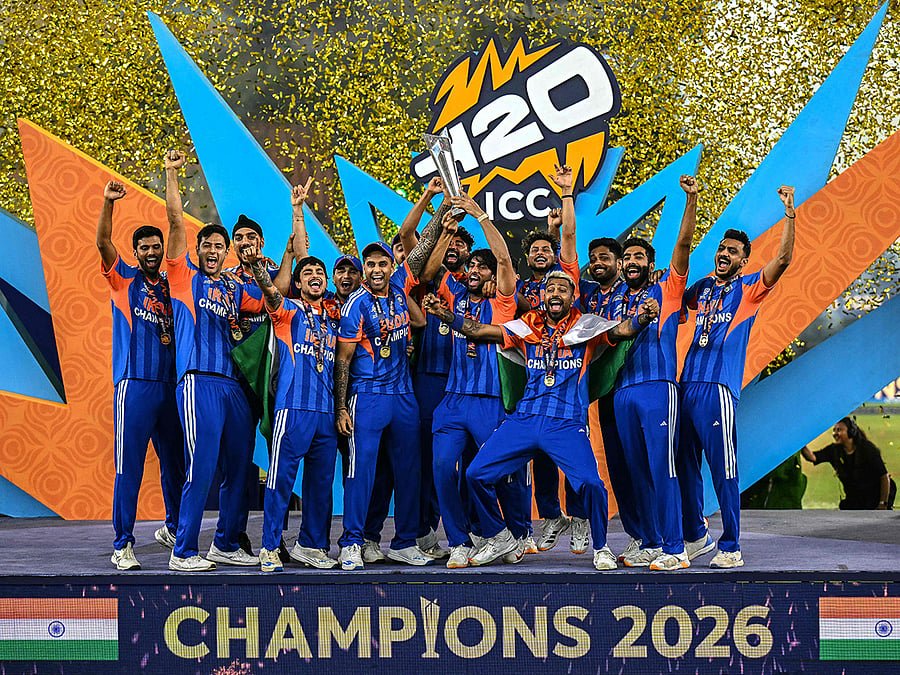
Winning another T20 World Cup established India as the most successful team in the format’s history, securing titles in:
- 2007
- 2024
- 2026
This achievement was not the result of a single generation of players but rather two decades of continuous evolution.
The Depth of Indian Cricket Talent
One of the most decisive advantages behind India’s T20 dominance is the unmatched depth of talent within the country’s cricket ecosystem.
Thanks to domestic tournaments, academies, and the IPL scouting system, India constantly produces world-class players capable of performing at the international level.
Emerging stars such as Abhishek Sharma and Tilak Varma symbolize the next generation of Indian cricket. These players bring fearless batting, athletic fielding, and adaptability—qualities essential for modern T20 success.
India’s talent pipeline is so deep that the nation could realistically field two competitive international squads simultaneously.
This level of depth ensures that injuries, retirements, or form slumps rarely weaken the team’s overall strength.
The Perfect Balance: Power Batting and Elite Bowling
While explosive batting often captures headlines, India’s bowling attack has been equally critical to their dominance.
The success formula combines:
- Aggressive top-order batting
- Flexible middle-order finishers
- World-class pace bowlers
- Highly skilled spin options
Players like Jasprit Bumrah have redefined death bowling with unmatched accuracy and composure under pressure. Meanwhile, India’s spin department continues to provide tactical control in middle overs.
This balanced structure allows India to adapt to any match situation, whether defending totals or chasing under pressure.
India’s Global Impact on the T20 Format
India’s influence extends far beyond victories and trophies. The country has fundamentally changed how the world approaches T20 cricket.
Several global trends can be traced back to India’s innovations:
- Franchise leagues modeled after the IPL
- Aggressive batting philosophies
- Commercial growth of the T20 format
- Advanced analytics and performance tracking
- Player specialization for short-format cricket
Cricket boards worldwide now design their development systems around T20 strategies pioneered in India.
A New Era of T20 Cricket Dominance
India’s journey from uncertain participants in 2007 to undisputed leaders of T20 cricket represents one of the most remarkable transformations in sports history.
The team evolved through:
- Early experimentation
- Years of painful defeats
- Strategic reinvention
- Generational talent development
Today, India does more than compete in T20 cricket. It defines the modern blueprint for success in the format.
Other nations continue striving to match the consistency, depth, and innovation that have become hallmarks of Indian cricket.
The evolution is complete: India is no longer chasing greatness in T20 cricket — it has become the standard by which greatness is measured.
India won its first T20 World Cup in 2007 under the captaincy of MS Dhoni.
The IPL revolutionized T20 cricket by introducing aggressive batting, global player participation, and advanced analytics.
India’s dominance comes from strong domestic talent, IPL exposure, aggressive strategies, and world-class bowling.
Players like MS Dhoni, Rohit Sharma, Suryakumar Yadav, and Jasprit Bumrah played key roles.
India has won three T20 World Cups in 2007, 2024, and 2026.