
The Forgotten Legacy of Habaspuri Handloom in Kalahandi
Deep in the cultural landscape of Odisha’s Kalahandi district, we encounter a small village that carries an extraordinary artistic legacy—Habaspur, the birthplace of the iconic Habaspuri handloom. For generations, this village was known for producing some of the most intricate and symbolic handwoven textiles in eastern India. The Habaspuri saree, celebrated for its distinctive motifs and earthy color palette, once held a prestigious place in India’s textile heritage.
However, this legacy nearly vanished.


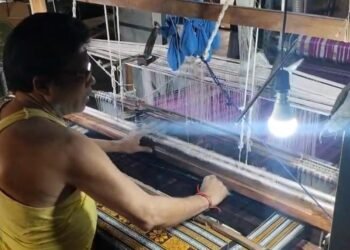
For nearly two decades, the rhythmic sound of wooden looms that once echoed through the village disappeared. Skilled weavers abandoned their craft, families migrated in search of survival, and machine-made fabrics began replacing the labor-intensive artistry of traditional weaving. The cultural identity of Habaspur faded into obscurity while the name “Habaspuri” continued to survive in museums, boutique stores, and textile exhibitions across India.
The irony was striking: the world admired the craft, yet the village that created it had almost forgotten how to produce it.
Today, a remarkable transformation is underway. Through structured training programs and the determination of local women, the Habaspuri weaving tradition is being revived from the ground up, restoring both cultural pride and economic opportunity.
The Distinctive Identity of Habaspuri Weaving
To understand why the revival of Habaspuri handloom matters, we must recognize what makes this textile unique.
Habaspuri fabrics are known for their symbolic motifs, which often reflect mythology, nature, and architectural elements. These motifs are not random decorations; they carry deep cultural meanings rooted in Odisha’s artistic traditions.
Common motifs include:
- Temple Towers (Deula designs) representing spiritual architecture
- Lions, symbolizing strength and guardianship
- Fish patterns, associated with prosperity and continuity
- Geometric temple borders, reflecting classical Odishan aesthetics
These designs are woven using a highly complex method that requires pre-planning the pattern on yarn before weaving begins. Unlike printed textiles, the motifs are embedded within the fabric itself through the traditional Bandha technique, a form of tie-dye resist weaving.
The result is a textile that is structurally patterned rather than surface decorated, making every Habaspuri saree a true work of craftsmanship.
The Collapse of a Traditional Weaving Ecosystem
For centuries, the Bhulia community carried forward the Habaspuri weaving tradition. The craft was passed from father to son, maintaining a lineage of artisans who understood the delicate balance between yarn preparation, pattern planning, and loom operation.
But several forces disrupted this ecosystem:
- Industrial textile production flooded the market with cheaper fabrics
- Limited government support weakened artisan livelihoods
- Urban migration forced skilled weavers to abandon their looms
- Declining local demand reduced incentives to continue the craft
As economic pressures grew, the weaving pits in Habaspur fell silent. The younger generation saw weaving not as a cultural inheritance but as a financially unstable occupation.
The disappearance of the craft from daily life marked one of the most severe cultural losses in the region.
The Emergence of a Women-Led Revival Movement
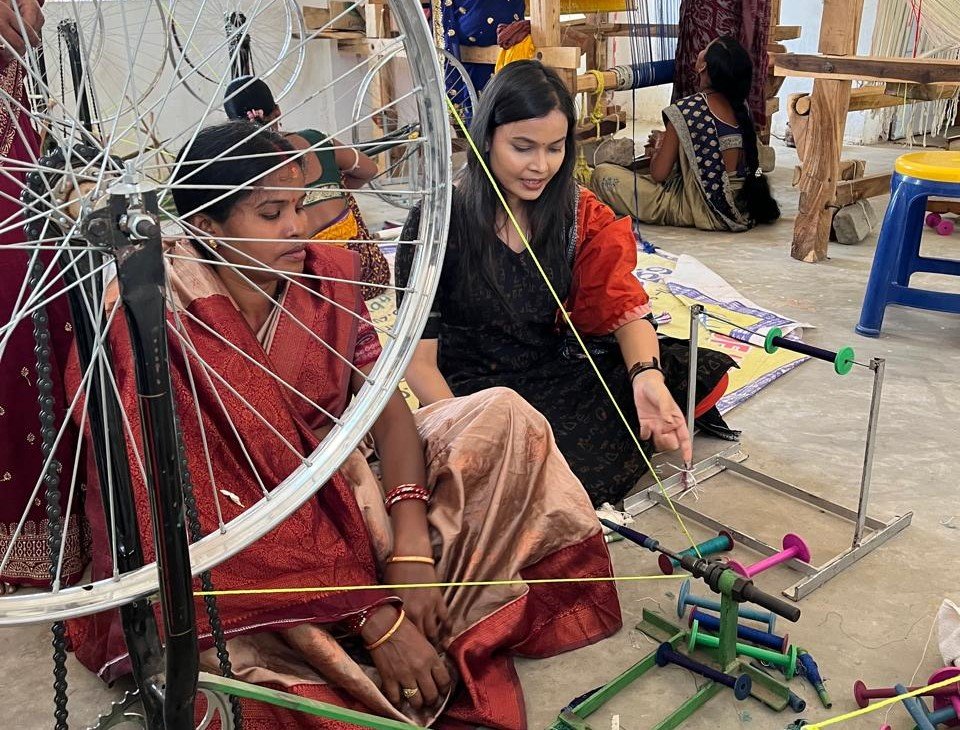
The revival of Habaspuri handloom did not begin with large industrial investment. Instead, it started with community training programs focused on women’s participation.
Traditionally, weaving knowledge was restricted to specific families within the Bhulia community. The modern revival initiative broke that barrier by opening training opportunities to women from all social backgrounds.
This shift produced several critical changes:
- The craft became inclusive rather than hereditary
- Women gained direct access to skill-based employment
- The village developed a new generation of artisans
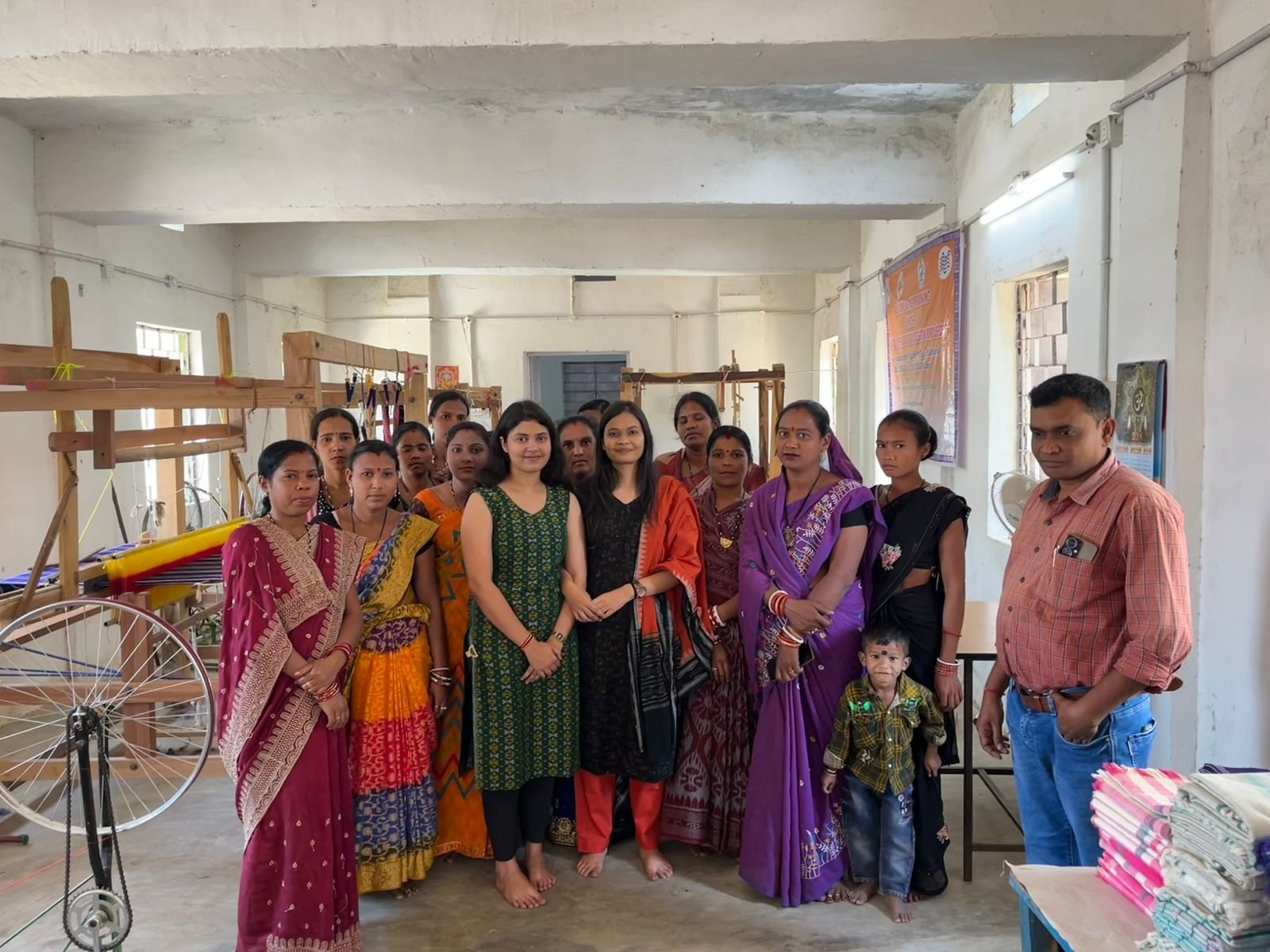
Inside the Habaspur training center, rows of women now sit beside traditional looms learning techniques that were once disappearing.
Many of these trainees come from households with no prior weaving experience. Yet through structured training, they are mastering one of India’s most intricate textile traditions.
The Intensive 300-Day Habaspuri Weaving Training Program
Reviving a complex craft like Habaspuri weaving requires far more than basic instruction. The training program follows a rigorous multi-stage curriculum lasting nearly a year, transforming beginners into skilled artisans.
1. Foundation Training: Mastering the Loom (180 Days)
The first stage focuses on fundamental weaving skills. Trainees learn:
- Thread tension control
- Warp and weft alignment
- Shuttle handling techniques
- Proper sitting posture for long weaving sessions
This phase builds the technical discipline necessary to operate traditional pit looms, which demand patience, precision, and endurance.
2. Jala Dabi Pattern Technique (4 Months)
After mastering the basics, trainees begin learning Jala Dabi, a sophisticated method used to create woven patterns.
This stage requires:
- Mathematical understanding of pattern grids
- Careful thread arrangement
- Exceptional hand-eye coordination
The technique determines how motifs appear in the final fabric. Even a minor mistake in alignment can distort the entire design.
3. Bandha Kala: The Heart of Habaspuri Craft
The most iconic feature of Habaspuri weaving is Bandha Kala, the traditional tie-dye process.
Before weaving begins, artisans carefully tie sections of yarn and dye them in stages. These dyed threads are later woven together to form patterns embedded within the cloth.
This process requires:
- Precise yarn binding
- Controlled dye penetration
- Accurate pattern visualization
Unlike modern digital textile design, Bandha Kala demands that artisans imagine the finished pattern before the weaving even begins.
4. Natural Dye Chemistry and Color Mastery
The final stage of training introduces color science and dye preparation.
Trainees learn how to:
- Mix pigments for traditional earthy tones
- Achieve consistent dye absorption
- Create gradient shades used in Habaspuri textiles
Color harmony is essential, as Habaspuri sarees are known for deep reds, rust browns, indigo blues, and muted gold tones.
Economic Empowerment Through Skill Development
During the training period, participants receive a monthly stipend of ₹6,000, providing financial stability while they learn.
This stipend serves several purposes:
- It compensates trainees for their time and effort
- It reduces economic pressure to abandon training
- It encourages long-term participation in the craft
For many families in rural Kalahandi, this support represents a crucial source of steady income.
Managing the Habaspuri Brand Through Artisan Committees
Producing textiles is only one part of the revival process. To ensure sustainable income for artisans, product pricing and sales must be carefully managed.
A 25-member committee oversees the marketing and sale of textiles produced during training. This body ensures:
- Fair pricing for artisans
- Quality control for Habaspuri products
- Protection of the craft’s brand value
By organizing collectively, the artisans prevent exploitation by middlemen and maintain the premium identity of Habaspuri textiles.
From Trainee to Independent Artisan
The revival program does not end with training.
Each graduate receives access to a personal handloom worth approximately ₹35,000. Trainees contribute about 10% of the cost, ensuring they remain invested in their craft as a long-term livelihood.
With their own loom installed at home, these artisans can:
- Accept independent weaving orders
- Produce sarees for cooperative sales
- Build their own micro-enterprises
This model converts trainees into self-reliant textile entrepreneurs rather than temporary workers.
Cultural Preservation Through Economic Sustainability
The revival of Habaspuri handloom is not merely an artistic achievement—it is a model for sustainable cultural preservation.
By combining:
- structured training
- community participation
- artisan ownership
- market organization
the program ensures that the craft survives beyond temporary funding cycles.
The renewed activity inside Habaspur has restored something far more valuable than employment. It has restored cultural identity and generational pride.
The Future of Habaspuri Handloom
Today, the looms of Habaspur are no longer silent.
The steady rhythm of wooden shuttles moving across cotton yarn signals a powerful transformation. What was once considered a dying craft has become a symbol of resilience and empowerment.
The women who now operate these looms are not simply artisans. They are custodians of a cultural heritage that nearly disappeared.
With every thread they weave, they rebuild a story that belongs not only to Habaspur but to the broader narrative of India’s handloom traditions.