

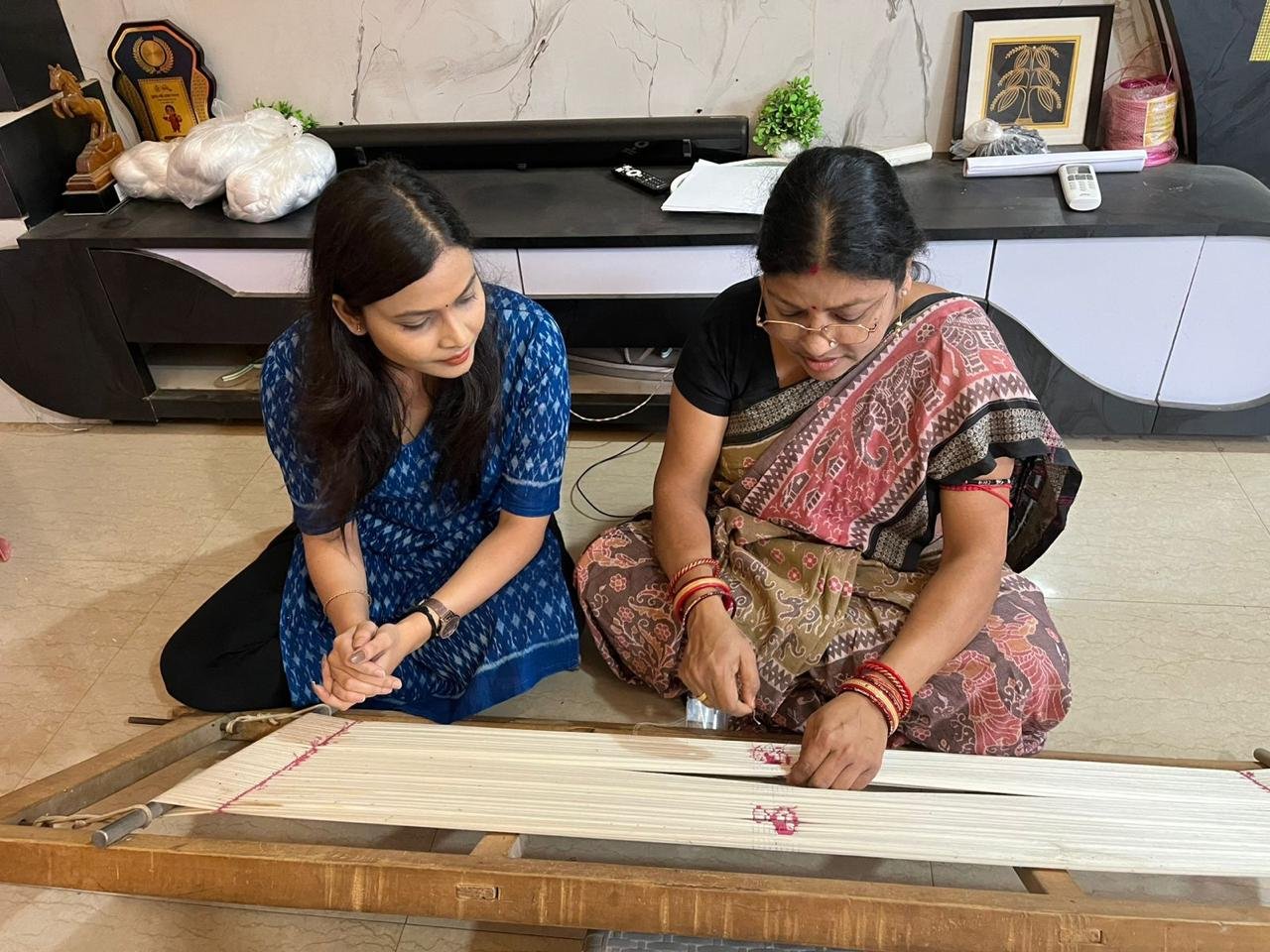
In Western Odisha, where looms echo through villages and colors define culture, Smt Sukanti Meher stands as a symbol of transformation. A master of Sambalpuri handloom, she turned a traditional craft into a platform for innovation, recognition, and women’s empowerment.
Her journey proves one thing: talent alone doesn’t create impact—discipline and direction do.
From Duty to Destiny: The Early Life of Sukanti Meher
Like many women in weaving communities, Smt Sukanti Meher didn’t begin with passion. Weaving was expected, not chosen.
She left school after Class 9 at Panchayat High School, Tuhilamal. No formal training. No design degree. Just repetition, observation, and self-experimentation.
What changed everything was belief—her faith in Maa Samaleswari. She credits her creative vision to divine “Shakti,” which gave her the mental edge to push through 15 years of struggle—a phase where most quit.
That persistence paid off. Her work eventually reached elite clients, including Nita Ambani.
Mastering Sambalpuri Bandha: Award-Winning Designs
Smt Sukanti Meher specializes in Sambalpuri Bandha (Tie & Dye)—one of India’s most technically demanding textile arts.
Two designs define her legacy:
- Gajagamini – A powerful elephant motif symbolizing strength and grace.
→ Won State Award (2010–11) - Vivaha – A design capturing the sacred essence of Indian weddings.
→ Won National Award (2011) from the Ministry of Textiles
She didn’t stop at weaving. She mastered:
- Block printing
- Screen printing
- Cost-efficient production techniques
That last one matters. Most artisans fail commercially because they ignore economics. She didn’t.
Beyond Craft: Leading Women’s Empowerment in Handloom
This is where her impact becomes real—not just artistic, but structural.
Since 2007, Smt Sukanti Meher has worked as a trainer with:
- United Nations Industrial Development Organization (UNIDO)
- Ministry of Textiles
She trained women in clusters like Makadia (Balasore) and conducted masterclasses at:
- Indian Institute of Handloom Technology
Her approach is blunt and effective:
Stop being labor. Start being designers and decision-makers.
She focuses on turning women from workers into entrepreneurs—which is the only real form of empowerment.
Global Recognition: From Barpali to International Platforms
Her work didn’t stay local.
She represented Sambalpuri Bandha at:
- Lal Bahadur Shastri National Academy of Administration
- Global Indian Festival, Malaysia
- Dastkar Exhibition, New Delhi
- Surajkund Craft Mela
She also contributed institutionally:
- Member of Internal Complaints Committee at IIM Sambalpur
- Registered exporter under the Department of Commerce
- Holder of GI registration for Sambalpuri Bandha sarees
That GI tag is critical—it protects authenticity and increases market value.
Weaving the Future: Why Sukanti Meher Matters
Most artisans preserve tradition. Few evolve it.
Smt Sukanti Meher did both.
Her philosophy is simple:
- Skills matter
- Teaching matters more
Through the Guru–Shishya Parampara, she is building a pipeline of skilled women who won’t just continue the craft—but scale it.
She isn’t just weaving sarees.
She’s building an ecosystem.
Conclusion
If you strip away the emotional storytelling, here’s the hard truth:
- She had limited education
- Faced long struggle
- Worked in a low-margin industry
Yet she built national recognition + global presence + social impact
That doesn’t happen by accident. It’s the result of:
- Consistency
- Skill stacking
- Strategic thinking
And that’s exactly why Smt Sukanti Meher stands out—not just as a weaver, but as a force in India’s handloom sector.