

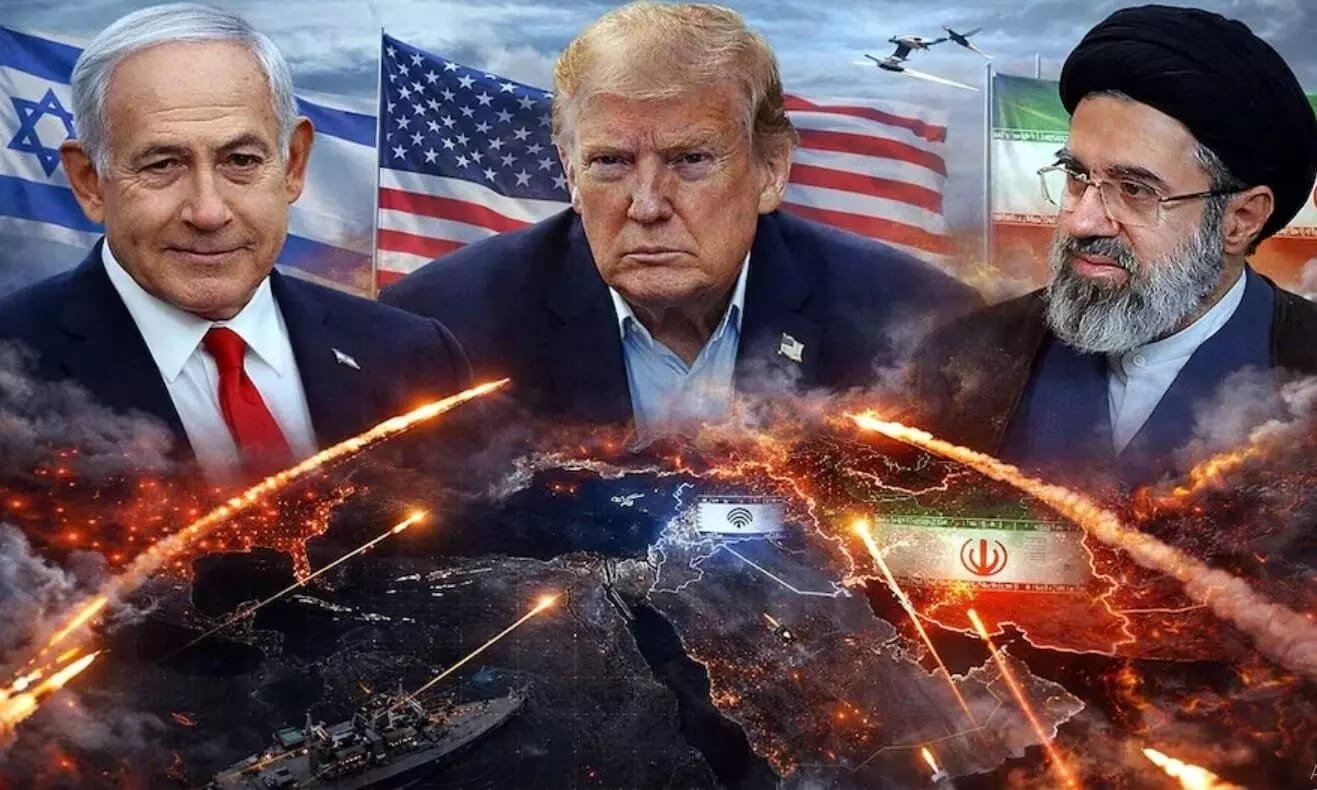
Global tensions impact on India, the global geopolitical landscape has entered one of its most fragile periods in decades. Conflicts that once seemed distant from everyday Indian life are now influencing fuel prices, household budgets, job security, and national economic stability. The intensifying tensions in West Asia war effect on India economy, combined with rising rivalries among powerful nations, have created a chain reaction that is reshaping India’s economic environment.
India, as one of the world’s fastest-growing economies and one of the largest energy importers, sits directly in the path of these disruptions. From energy markets and remittances to supply chains and currency fluctuations, the consequences are visible across every sector of Indian society.
Global Power Rivalries Are Reshaping the Economic Order
The current global tensions are rooted in a complex rivalry between several major powers. Strategic disagreements between the United States, Israel, and Iran have intensified geopolitical instability across West Asia. Military posturing, naval deployments, sanctions, and retaliatory threats have transformed economic tools into geopolitical weapons.
What makes the situation particularly alarming is the growing shift toward geoeconomic warfare. Countries are increasingly using trade restrictions, financial sanctions, and energy supplies as strategic tools to pressure rivals. This shift has created uncertainty across global markets, especially for countries like India that rely heavily on international trade.
One of the most critical flashpoints is the Strait of Hormuz, a narrow maritime corridor through which roughly 20% of the world’s oil and natural gas shipments pass. Any disruption in this vital shipping route immediately impacts global energy prices and shipping costs. Even the possibility of naval blockades or military confrontation in this region is enough to send energy markets into panic.
For India, which imports more than 80% of its crude oil requirements, the consequences of instability in this region are immediate and severe.
Rising Oil Prices and the Domino Effect on the Indian Economy
The most visible impact of global tensions is the surge in crude oil prices. When international benchmark prices rise above $100 per barrel, the ripple effects spread throughout the entire Indian economy.
Energy costs influence almost every sector:
- Transportation
- Manufacturing
- Agriculture
- Logistics
- Electricity generation
As fuel becomes more expensive, the cost of moving goods across the country rises sharply. Trucks transporting vegetables, grains, and consumer products face higher operating costs, which ultimately translate into higher prices for consumers.
This phenomenon, often referred to as imported inflation, occurs when rising global commodity prices increase domestic inflation levels. Economists warn that prolonged high energy prices could reduce India’s GDP growth by nearly 1%, slowing economic momentum at a time when the country is striving to maintain rapid development.
The Kitchen Crisis: Rising LPG Prices and Household Pressure
The impact of global tensions becomes most visible in Indian kitchens.
India depends heavily on imports of Liquefied Petroleum Gas (LPG) from Gulf countries. Nearly 90% of India’s LPG supply chain is linked to the broader energy markets of West Asia. When supply routes become uncertain or shipping costs rise, the effect is immediate.
Households across India have already begun feeling the pressure:
- Cooking gas cylinders have become significantly more expensive
- Restaurant owners face rising commercial LPG costs
- Small food businesses struggle to maintain profit margins
In major cities such as Bengaluru, Mumbai, and Delhi, restaurant operators report rising operational expenses due to the sharp increase in gas cylinder prices. Some establishments have reduced menu options, while others have temporarily closed kitchens during peak price spikes.
For middle-class and lower-income households, rising LPG costs force difficult decisions between energy expenses, groceries, and household necessities.
Indian Workers in the Gulf Face Growing Uncertainty
Another critical dimension of this crisis involves the millions of Indian workers living in Gulf countries.
The Gulf region hosts one of the largest overseas Indian populations, particularly in countries such as the United Arab Emirates, Saudi Arabia, Qatar, and Kuwait. These workers play a vital role in supporting families back home through remittances.
India receives over $100 billion annually in remittances, making it the largest recipient of foreign remittances in the world. A large portion of this money originates from Indian workers employed in construction, hospitality, shipping, and services across West Asia.
However, escalating conflict introduces two major concerns:
1. Safety and Security Risks
Military escalation in the region raises concerns about the physical safety of Indian nationals. Missile strikes, drone attacks, and naval tensions create unpredictable risks for workers, sailors, and professionals living in these areas.
The Indian government closely monitors the situation and maintains evacuation plans to protect citizens if tensions escalate further.
2. Employment and Income Stability
If regional economies slow due to war-related disruptions, employment opportunities could shrink. Construction projects may halt, tourism could decline, and shipping routes may become restricted.
Such disruptions could lead to job losses or reduced wages for migrant workers, directly affecting the millions of families in India who rely on remittance income for:
- Education
- Healthcare
- Housing
- Small businesses
The consequences could ripple across rural economies where remittances play a crucial role in local financial stability.
Stock Market Volatility and Investor Anxiety
Financial markets react quickly to geopolitical uncertainty. Indian stock indices have already shown signs of volatility.
Sharp increases in global oil prices triggered declines in major market benchmarks as investors rushed to protect capital from potential instability. Energy-intensive industries, airlines, transportation companies, and manufacturing sectors face particularly high risk when fuel prices surge.
Investors typically move money toward safer assets during global crises, which can lead to capital outflows from emerging markets like India.
This uncertainty can temporarily weaken investor confidence and slow down foreign investment flows.
The Rupee Under Pressure Against the US Dollar
Currency markets also reflect geopolitical stress.
When global uncertainty rises, investors tend to move funds toward stronger currencies such as the US dollar. This shift places downward pressure on the Indian rupee.
A weaker rupee has several consequences:
- Imported goods become more expensive
- Energy costs rise further
- Industrial raw materials cost more
- Inflation pressures increase
India relies heavily on imported commodities such as fertilizers, crude oil, electronic components, and industrial chemicals. When the rupee weakens against the dollar, businesses must pay more for these imports.
Farmers are particularly affected because India imports essential raw materials for fertilizer production from countries like Oman and Qatar. Rising input costs eventually lead to higher food prices across the country.
Government Strategies to Stabilize the Situation
To shield the economy from global shocks, India has begun implementing several strategic measures.
Strategic Oil Reserves
India maintains strategic petroleum reserves designed to protect the country during temporary supply disruptions. By releasing oil from these reserves, the government can stabilize domestic supply and prevent sudden fuel shortages.
Diversifying Energy Sources
India is actively seeking alternative crude suppliers from regions such as:
- Russia
- South America
- Africa
This diversification reduces dependence on any single geopolitical region.
Accelerating Renewable Energy
The crisis has also renewed urgency for India’s transition toward renewable energy sources, including solar, wind, and green hydrogen. Reducing reliance on imported fossil fuels remains a long-term strategic priority.
India’s Diplomatic Role in Global Peace Efforts
India occupies a unique position in international diplomacy. Unlike many countries that align firmly with one side, India maintains diplomatic relationships with a wide range of global powers.
This balanced approach allows India to act as a potential mediator in international disputes. Diplomatic engagement with multiple nations enables the country to advocate for dialogue and de-escalation.
India’s growing global influence means that its voice carries increasing weight in international forums when promoting stability, cooperation, and peaceful conflict resolution.
Conclusion: A Global Crisis with Local Consequences
The geopolitical tensions of 2026 demonstrate how deeply interconnected the modern world has become. A conflict thousands of kilometers away can influence gas cylinder prices in Indian homes, transportation costs in rural markets, and job security for migrant workers abroad.
India’s economic resilience is being tested by these global shocks. Yet the country continues to adapt through strategic energy planning, diplomatic engagement, and economic reforms.
For millions of Indian households, however, the stakes are immediate and personal. Rising prices, uncertain incomes, and global instability have transformed distant geopolitical rivalries into everyday realities.